 Rocco Gizzo
I love a classic carbonara, but sometimes I want something with a little more heat. That’s where my Carbonara Calabrese comes in.
This recipe takes everything I love about traditional carbonara—guanciale, egg yolks, Pecorino Romano, and freshly cracked black pepper—and adds one ingredient: ‘nduja.
If you’re not familiar with it, ‘nduja is a spicy, spreadable pork salume from Calabria. When you warm it in a skillet with a little pasta water, it breaks down into a rich, spicy sauce that coats the pasta.
I start by slowly rendering guanciale until it’s crispy, then use the rendered fat to toast black pepper and cook the ‘nduja. Once the pasta is coated, I finish everything off the heat with a mixture of egg yolks and Pecorino Romano.
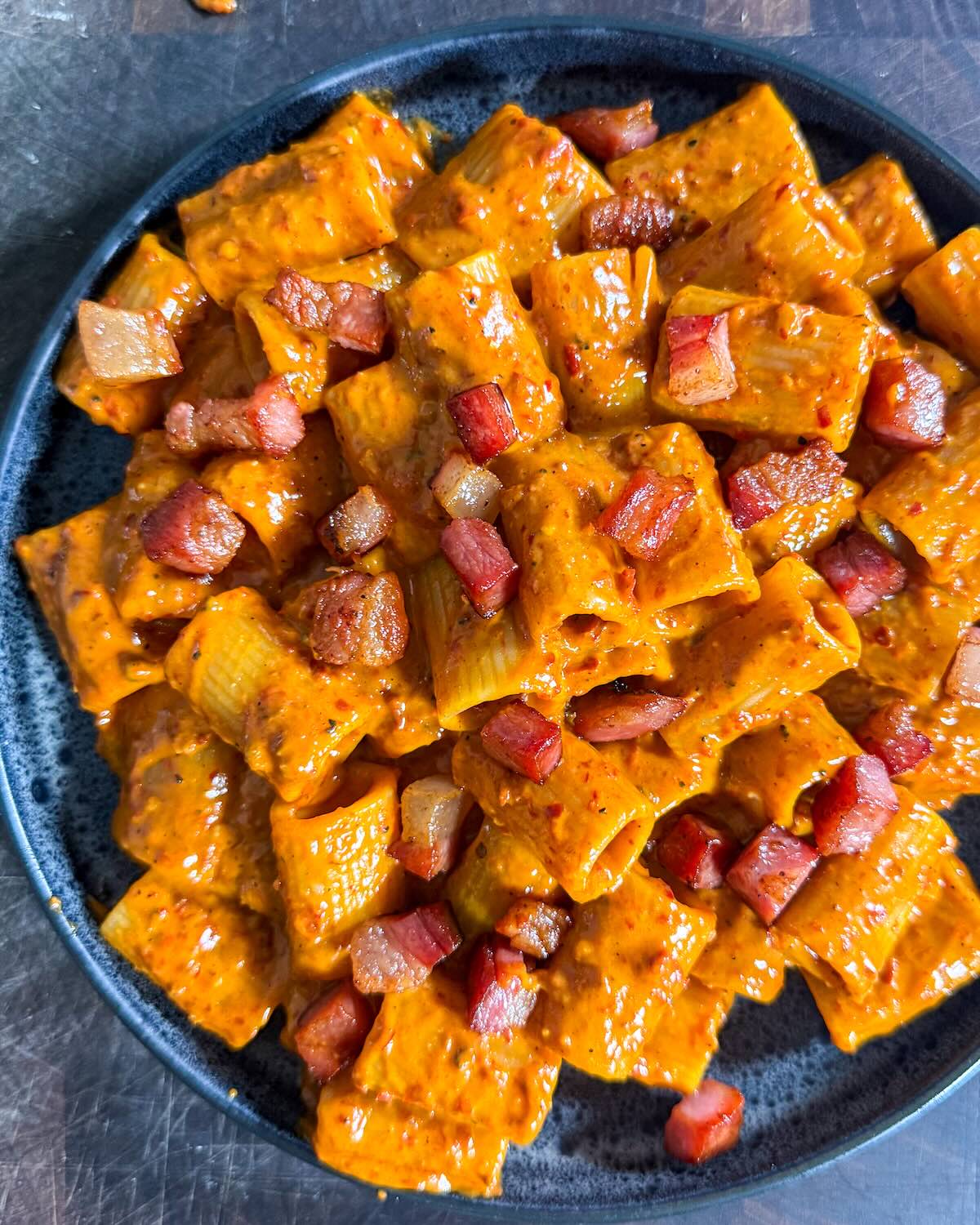
The result is a spicy carbonara with a smooth, silky sauce, plenty of Pecorino, and crispy guanciale on top.
I used mezzi rigatoni for this recipe because I love how the sauce gets into the pasta, but you can use whatever shape you prefer.
If you love classic carbonara and enjoy a little spice, this is a variation worth trying.
Carbonara Calabrese at a Glance
- What It Is: A spicy variation of classic carbonara made with Calabrian ‘nduja.
- The Flavor: Rich, spicy ‘nduja, savory guanciale, sharp Pecorino Romano, egg yolks, and toasted black pepper.
- Perfect For: Pasta night, date night, or anyone who loves classic carbonara with a spicy twist.
- Rocco’s Tip: Remove the skillet from the heat before adding the egg yolk and Pecorino mixture. Keep tossing and use pasta water as needed to create a silky sauce.
- Total
- 30 Mins
- Makes
- 2
Why You’ll Love Carbonara Calabrese
Classic carbonara is one of my favorite pasta dishes, and I love how a handful of ingredients can come together to make something so good.
For this version, I wanted to keep the foundation of carbonara exactly the same while adding a little more spice and richness.
That’s why I use ‘nduja.
It’s a spreadable Calabrian pork salume with plenty of heat, and it melts into the rendered guanciale fat and pasta water to create a flavorful base for the sauce.
You still get everything that makes carbonara what it is: crispy guanciale, egg yolks, Pecorino Romano, and plenty of black pepper.
The technique is important, too. I render the guanciale slowly, toast the black pepper in the fat, and finish the pasta off the heat with the egg and cheese mixture.
That last step is what brings everything together into a silky sauce without scrambling the eggs.
And because the recipe comes together in about 30 minutes, it’s a great option for a weeknight pasta dinner when you want something a little different.
If you already love carbonara, this is an easy way to change things up without losing what makes the original so good.
Ingredients You’ll Need
The ingredients are almost identical to a classic carbonara, with the addition of ‘nduja for heat and richness.
Pasta: I used 12 ounces of mezzi rigatoni. The short, tubular shape works well with the sauce, but you can use another pasta shape if you prefer.
‘Nduja: This is the ingredient that makes the recipe Calabrese. ‘Nduja is a spicy, spreadable pork salume from Calabria that breaks down into the sauce when warmed with pasta water. I use 150 grams.
Guanciale: I use 80 grams, cut into cubes. Slowly rendering the guanciale releases its fat, which becomes the base for the sauce. The crispy pieces go back on top when serving.
Egg Yolks: Four egg yolks help create the rich, silky texture of the finished carbonara. I whisk them with Pecorino Romano and black pepper before adding them to the pasta.
Pecorino Romano: I use 150 grams, freshly grated. It’s one of the defining ingredients in carbonara, bringing a sharp, salty flavor to the sauce.
Freshly Cracked Black Pepper: Black pepper is essential to carbonara. I use approximately 20 cracks in the egg and cheese mixture and another 20 cracks in the rendered guanciale fat.
Pasta Water: While it isn’t part of the measured ingredient list, the starchy water is essential to this recipe. It helps turn the ‘nduja into a sauce, tempers the eggs, and keeps the finished carbonara silky.
Salt: You’ll need salt for the pasta water, but keep in mind that the guanciale, ‘nduja, and Pecorino already bring plenty of seasoning.
How to Make Carbonara Calabrese
The key to this recipe is building the sauce in stages and controlling the heat when you add the eggs.
Step 1: Render the Guanciale
Place a skillet over low heat and add the cubed guanciale.
Let it cook slowly for approximately 7 minutes, until the fat renders and the guanciale becomes crispy.
Remove the crispy guanciale and transfer it to a paper towel-lined plate, leaving the rendered fat in the skillet.
Step 2: Prepare the Egg and Pecorino Mixture
In a small bowl, combine four egg yolks, freshly grated Pecorino Romano, and approximately 20 cracks of black pepper.
Whisk until the ingredients form a thick, paste-like mixture.
Set the bowl aside while you cook the pasta.
Step 3: Cook the Pasta
Bring a large pot of salted water to a boil.
Add the mezzi rigatoni and cook until it’s approximately 3 minutes shy of al dente.
Before transferring the pasta, make sure you have plenty of reserved pasta water.
Step 4: Toast the Pepper and Add the ‘Nduja
While the pasta cooks, add another 20 cracks of black pepper to the skillet with the rendered guanciale fat.
Heat over medium until the pepper becomes fragrant and begins to toast.
Add the ‘nduja along with a ladle of pasta water.
Stir until the ‘nduja breaks down and combines with the water and guanciale fat to form a sauce.
Step 5: Coat the Pasta
When the pasta is about 3 minutes shy of al dente, transfer it directly to the skillet with the ‘nduja sauce.
Toss until the pasta is fully coated.
Step 6: Temper the Eggs
While whisking the egg yolk and Pecorino mixture, slowly add approximately half a ladle of hot pasta water.
This helps loosen the mixture and gently warms the eggs before they go into the pasta.
Step 7: Finish the Carbonara Off the Heat
Remove the skillet from the heat.
Pour the egg and Pecorino mixture over the pasta along with another half ladle of pasta water.
Immediately begin tossing the pasta so the sauce coats everything evenly.
If the sauce starts to tighten, add a splash of pasta water and keep tossing.
Continue until the sauce is smooth, silky, and clings to the mezzi rigatoni.
Step 8: Plate and Serve
Divide the Carbonara Calabrese among your plates.
Finish with the reserved crispy guanciale, freshly cracked black pepper, and additional grated Pecorino Romano.
Serve immediately while the sauce is at its best.
Tips
Render the guanciale slowly. Start with the guanciale in a skillet over low heat. This gives the fat time to render before the outside gets too dark. You want crispy guanciale and plenty of flavorful fat left in the pan.
Use freshly grated Pecorino Romano. Finely grated Pecorino incorporates more easily into the egg yolk mixture and helps create a smoother finished sauce.
Don’t skip the black pepper. I use it in two stages: first in the egg and Pecorino mixture, then toasted in the rendered guanciale fat. Both contribute to the finished flavor.
Let the ‘nduja break down into the sauce. Adding pasta water to the ‘nduja helps it disperse throughout the skillet rather than remaining in large pieces.
Reserve plenty of pasta water. You’ll need it for the ‘nduja sauce, tempering the eggs, and adjusting the consistency once everything comes together.
Remove the skillet from the heat before adding the eggs. This is the most important part of making carbonara. Too much direct heat can cause the eggs to scramble instead of forming a smooth sauce.
Keep the pasta moving. Once you add the egg yolk mixture, toss continuously so the sauce coats the pasta evenly.
Adjust the sauce gradually. If it becomes too thick, add pasta water a splash at a time. You want the sauce to cling to the pasta without becoming watery.
Taste before adding salt. Guanciale, ‘nduja, and Pecorino Romano are already well seasoned, so additional salt may not be necessary.
Rocco’s Pro Tip
The secret to a good carbonara is controlling the heat. Once the pasta is coated in the ‘nduja sauce, remove the skillet from the heat before adding the tempered egg yolks and Pecorino. Toss immediately, adding pasta water as needed, until the sauce is smooth and silky.
Frequently Asked Questions
What is Carbonara Calabrese?
Carbonara Calabrese is my spicy variation of classic carbonara. It uses the traditional combination of guanciale, egg yolks, Pecorino Romano, and black pepper, with the addition of Calabrian ‘nduja for extra heat and richness.
What is ‘Nduja?
‘Nduja is a spicy, spreadable pork salume from Calabria, in southern Italy. It’s typically made with pork and Calabrian chili peppers. Its soft texture allows it to break down into sauces when heated.
Is Carbonara Calabrese a traditional Italian recipe?
Traditional Roman carbonara doesn’t contain ‘nduja. My Carbonara Calabrese is a variation that combines the classic Roman technique with a distinctly Calabrian ingredient.
Does Carbonara Calabrese include any cream?
No. Just like classic carbonara, my recipe uses egg yolks, Pecorino Romano, rendered guanciale fat, and pasta water to create the sauce. The ‘nduja adds another layer of richness and flavor.
What pasta works best?
I used mezzi rigatoni because the short tubes hold the sauce well. Rigatoni, spaghetti, or another pasta shape you enjoy can also work.

A Little Calabrian Heat Changes Everything!
I love a classic carbonara, and there are certain things about it that I don’t want to change.
The guanciale, egg yolks, Pecorino Romano, and black pepper are all staying.
But sometimes I want a little spice, and that’s where the ‘nduja comes in.
For my Carbonara Calabrese, I take the same approach I would with a traditional carbonara, except I add ‘nduja to the rendered guanciale fat with a little pasta water.
It breaks down into a spicy sauce that coats the pasta before I add the egg yolk and Pecorino mixture.
You still get that silky carbonara sauce and crispy guanciale, but now there’s an extra layer of heat and richness from the ‘nduja.
I used mezzi rigatoni for this version, and I love how the sauce gets into every piece.
If you’re someone who loves carbonara but also enjoys Calabrian chili, this is a combination worth making.
Carbonara Calabrese (Spicy ‘Nduja Carbonara)
Ingredients
- 10-12 ounces pasta of choice I used mezzi rigatoni
- 150 g ‘nduja
- 80 g guanciale cubed
- 4 egg yolks
- 150 g Pecorino Romano freshly grated
- Freshly cracked black pepper as needed
- Salt for the pasta water
Instructions
- Render the guanciale: Place a skillet over low heat and add the cubed guanciale. Cook slowly until the fat renders and the guanciale becomes crispy, approximately 7 minutes. Transfer the crispy guanciale to a paper towel-lined plate, leaving the rendered fat in the skillet.
- Prepare the egg and cheese mixture: In a small bowl, combine the egg yolks, freshly grated Pecorino Romano, and approximately 20 cracks of black pepper. Whisk until a thick, paste-like mixture forms. Set aside.
- Cook the pasta: Bring a large pot of salted water to a boil. Add the pasta and cook until approximately 3 minutes shy of al dente. Reserve some pasta water before transferring the pasta.
- Toast the black pepper: While the pasta cooks, add approximately another 20 cracks of freshly ground black pepper to the skillet with the reserved guanciale fat. Heat over medium until the pepper becomes fragrant and begins to toast.
- Make the ‘nduja sauce: Add the ‘nduja to the skillet along with a ladle of pasta water. Stir until the ‘nduja breaks down and combines with the water and rendered fat to form a sauce.
- Add the pasta: Transfer the pasta to the skillet when it’s approximately 3 minutes shy of al dente. Toss until fully coated in the ‘nduja sauce.
- Temper the eggs: While whisking the egg yolk and Pecorino mixture, slowly add approximately ½ ladle of hot pasta water until incorporated.
- Finish the carbonara: Remove the skillet from the heat. Add the tempered egg and cheese mixture along with another ½ ladle of pasta water. Quickly toss until the pasta is evenly coated and the sauce becomes smooth and silky.
- Adjust the consistency: If the sauce begins to tighten, add more pasta water a splash at a time, continuing to toss until the desired consistency is reached.
- Serve: Plate the Carbonara Calabrese and finish with the reserved crispy guanciale, freshly cracked black pepper, and additional grated Pecorino Romano. Enjoy!
Did You Make This Recipe?
Pick your stars and tell me everything.